What is Wisdom?
By John Graveline, Director of Parish Life
September 27, 2026
“Wisdom is radiant and unfading, and she is easily discerned by those who love her and is found by those who seek her.”
Wisdom 6:12
This fall as we celebrate The Year of the Holy Spirit throughout the Diocese of Saginaw, we will explore each of the seven Gifts of the Holy Spirit that we received through Baptism and were fully activated in us through the Sacrament of Confirmation. By better understanding the meaning of these Gifts, we will be better able to put them to use in our Christian discipleship.
The first of the Gifts of the Holy Spirit is the Gift of Wisdom.
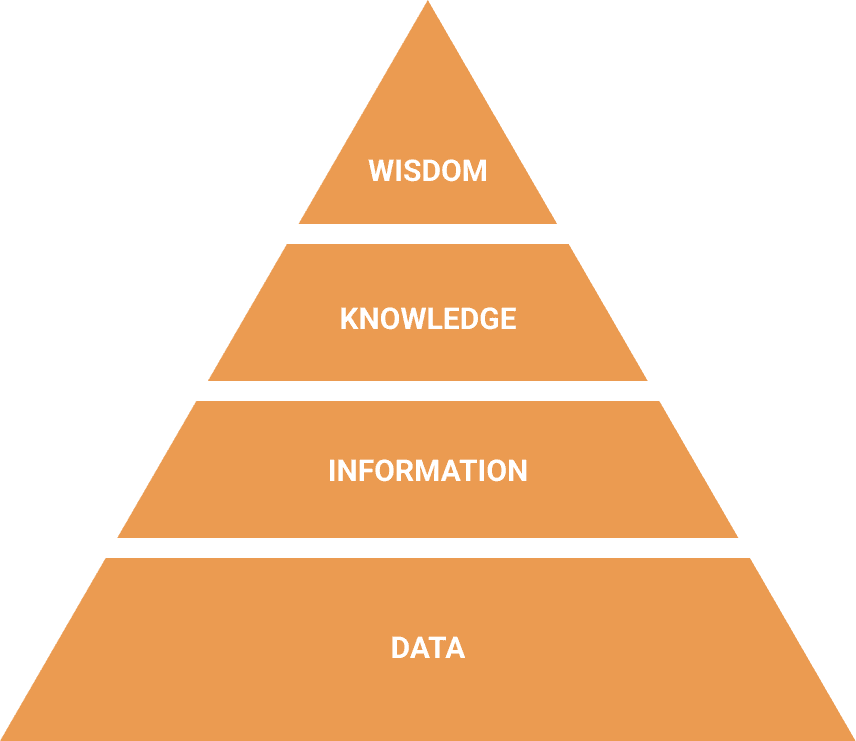
Wisdom is more than technological “know how.” Some of you may be familiar with what has come to be known as the DIKW pyramid. The base and lowest level of the pyramid is unorganized numbers and facts: data. The second level is when data is organized and contextualized: information. The third level is when information is analyzed and patterns are revealed: knowledge. The highest level is when the meaning and purpose of knowledge is revealed: wisdom. Wisdom looks beyond first appearances, perceiving underlying significance and taking the long view. Each level of the pyramid is much rarer than the one that preceded it.
We cannot help but feel drawn to people whom we perceive to be wise. I have been blessed with many wise teachers, mentors, and ministry formators in my life. On this Priesthood Sunday, I give thanks in a special way for the wisdom that both Fr. Rick and Fr. Joe have shared with me in my pastoral role at Assumption Parish. We all have “wisdom people” that we can point to in our lives: parents and grand-parents, teachers and mentors, friends and colleagues who have shared their wisdom with us and making us the people who we are today. Often, we associate wisdom with age and experience, and this is generally reliable although not always the case. Many of us have met older people who are somewhat foolish and younger people whose insight astounds us.
Progress in wisdom does not come from our successes but growing though our failures.
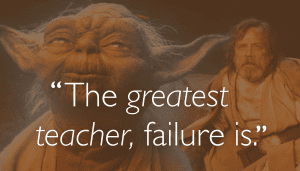
As a child of the 70s and 80s, from a young age I have associated wisdom with the character of Yoda from the Star Wars movies. While this might seem a little silly, the Catholic author G.K. Chesteron wrote in his famous book Orthodoxy, “That which I believe in with unbroken certainty, I learnt in the nursery” through fairy tales. I think that Yoda has taught at least 3 generations of young people some valuable lessons about wisdom. In the movie The Empire Strikes Back, we are introduced to Yoda as the somewhat mischievous mentor to the hero, Luke Skywalker. Luke basically does not listen to Yoda’s counsel or fails at every task of his training, ultimately resulting in him prematurely facing the main villain Darth Vader and being beaten badly in both body and spirit. After this experience, Luke is humbled and in the next movie, The Return of the Jedi, he returns to a more frail Yoda now ready to be more serious about his training. However, Yoda informs him that he does not require any more training. He has learned all that he needs through his humiliation, failures, and sufferings.
Finally, in the movie The Last Jedi, when an older Luke is called upon to mentor a new disciple, he is reluctant because of his past failures as a mentor. Yoda then returns to him in a vision to tell him, “Pass on what you have learned. Strength, mastery. But weakness, folly, failure also. Yes, failure most of all. The greatest teacher, failure is. Luke, we are what they grow beyond.” Progress in wisdom does not come from our successes but growing though our failures. Most “overnight success stories” are preceded by a long period of failures, mistakes, and suffering.
[Jesus said,] “God’s wisdom is vindicated by all who accept it.”
Luke 7:35
Let us focus now on Wisdom, specifically as a Gift of the Holy Spirit. Through the sheer Grace of God, the Holy Spirit dwells within us, empowering us to see with the eyes of the Spirit. The Gift of Wisdom allows us to see and discern the world through God’s eyes rather than the so-called wisdom of this world (1 Corinthians 3:19). This mystery is what St. Paul is referring to in this week’s Second Reading from his letter to the Philippians, when he exhorts us to “have in you the same attitude that is also in Christ Jesus.” (Philippians 2:5)
We become wise when we no longer live for ourselves, but freely displace ourselves to enter into the suffering of others.
Following the way of Jesus, empowered by the gift of his Holy Spirit, is Wisdom. We do this by living our lives in communion with his humble obedience and his compassion. To have the obedience of Jesus is not to become merely a rule-follower, but in the freedom of the Spirit always have our ears open to hear and heed the voice of God. Before every major decision and turning point in his ministry, Jesus would go off to a quiet place to pray, to listen for his Father’s will. We also become wise by relating to all people with Christian compassion. In the ancient Christian hymn that St. Paul quotes in today’s Second Reading, Jesus went beyond empathy for our fallen, wounded state by displacing (emptying) himself from his rightful place as the eternal Son of God to become one of us. By doing this, he entered our suffering and endured the rejection, violence, failure, and death that we experience in this vale of tears. Therefore, we become wise when we no longer live for ourselves, but freely displace ourselves to enter into the suffering of others, carrying their crosses with them in solidarity, and demonstrating to them that they are loved and valued, especially those who are viewed as “less than” by the warped values of this world—the unborn and their parents, the elderly, immigrants, the poor, prisoners, etc. (Matthew 25:31-46)
In the end, if we want to develop the Gift of Wisdom in our lives, learning to see and discern all things through God’s eyes, we need to become immersed in the Word of God inspired by the Holy Spirit. When we take the time to pray the Word (Psalms, Lectio Divina, etc.) and study the Scriptures, especially when we do so along with other Christians who have been given the Spirit’s Gift of Wisdom, our sensibilities become attuned to the meaning and purpose of all things as God has created them, redeemed them, and sustains them in being. When we are fully and consciously participating in the Mass, we actively listen to the Word of God proclaimed, asking the Holy Spirit to help us understand what we hear and conform our lives to the wisdom of the sacred, Spirit-breathed words found in the Bible.
May this Year of the Holy Spirit bring to life the Spirit’s Gift of Wisdom in our lives so that all people can bring about the truth and reality of the goodness of God, of each person, and of all of God’s creation.
John