Dignitatis Humanae: On Religious Liberty
By John Graveline, Director of Parish Life
July 5, 2026
“For freedom Christ set us free; so stand firm and do not submit again to the yoke of slavery . . . for you were called to freedom. But do not use this freedom as an opportunity for the flesh; rather, serve one another through love. For the whole law is fulfilled in one statement, namely, ‘You shall love your neighbor as yourself.’ But if you go on biting and devouring one another, beware that you are not consumed by one another.”
Galatians 5:1, 13-15
As we continue to reflect upon the documents of Vatican II at the beginning of the Year of the Holy Spirit, this week we begin to consider the question “Now that we have a clear understanding of who we are as Church, how are we as Catholic Christians related to political authorities and non-Catholics?” by exploring Vatican II’s Declaration on Religious Liberty (also known by its Latin title Dignitatis Humanae). This is most appropriate as we also reflect upon the meaning of our human rights and freedom as we celebrate the 250th anniversary of the Declaration of Independence this weekend.
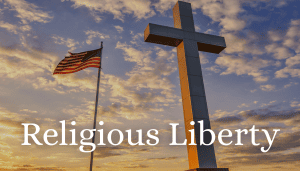
The United States Constitution, which guaranteed religious freedom in its First Amendment, was a watershed moment in the history of Church/state relations.
The relationship between the Church and political authority has been fraught over the first two Christian millennium, especially as it concerns religious liberty. The early Church had no political power, especially under the Roman Empire which martyred many Christians. The Church’s only power was the power of the Holy Spirit, through the Word that was preached and the witness of the life of the Christian community. After the Empire’s collapse, societal chaos was often curbed by the ordered life of monasteries. Abbots and Abbesses by necessity often shepherded not only those inside the walls of the monastery, but also the surrounding area. This planted the seeds of what has been called Christendom, where Church and state power were often interwoven—with benefits and perils for both. The era surrounding the Protestant Reformation saw this unravel as theological separations were also political separations; England became Anglican, Germany became Lutheran, the Netherlands became Calvinist, France, Italy, and Spain remained Roman Catholic, etc. This led to persecutions and wars between Christians and their nations. The roots of our American constitutional system have roots in this situation. The Mayflower Pilgrims were Calvinists fleeing persecution in Anglican England. The United States Constitution, which guaranteed religious freedom in its First Amendment, was a watershed moment in the history of Church/state relations.
The Catholic Church at first was very suspicious of the concept of religious freedom. In Catholic Italy, Jewish citizens were gathered in their own walled section of the city—ghettos—at nightfall. Colonialist practices sometimes imposed Catholicism in missionary fields. It was an oft-stated truism that “(theological and religious) error has no rights.” Also, Catholic churches were destroyed, worship was suppressed, and clergy and religious were tortured and killed during the French Revolution in the name of “Liberté, Égalité, Fraternité”—liberty, equality, and fraternity. With the dissolution of the Papal States in the mid-19th Century, it was clear that the age of Christendom was over.
The first half of the 20th Century saw the rise of new kinds of political/ideological genocides aimed at religious believers. The most glaring example was the Nazi Holocaust, which aimed to wipe out the Jewish people and killed almost 6 million Jews. Communism, both in Europe and in Asia, was explicitly founded as an atheistic political system. It has been responsible for tens of millions of deaths of religious believers as well as millions of unjust imprisonments. This still continues in our day, most notably the persecution of Muslim Uyghurs in China.
Within this backdrop, we can appreciate what can truly be called a development of Catholic doctrine in Vatican II’s Declaration on Religious Liberty which unambiguously stated, “the human person has a right to religious freedom . . . this right of the human person to religious freedom must be given such recognition in the constitutional order of society as will make it a civil right.” (Declaration on Religious Liberty, no. 2) There can be no mistaking the contribution to this Catholic doctrinal development made by the American Declaration of Independence and Constitution. Let’s note how Vatican II both affirms the rights and freedoms enunciated in America’s founding documents, while at the same time giving them a firm foundation in the truth of God’s Revelation.
The Catholic Church reminds us that religious liberty is not just freedom from religious coercion (which it is) but also freedom to fulfill our deepest orientation.
As concerns the concept of human rights, the Declaration of Independence states, “We hold these truths to be self-evident, that all men are created equal, that they are endowed by their Creator with certain unalienable Rights, that among these are Life, Liberty and the pursuit of Happiness.” While affirming this as true, the Catholic Church deepens this understanding by rooting human rights in who we are and what we are called to do. For example, “because they are persons, that is, beings endowed with reason and free will and therefore bearing personal responsibility, they are both impelled by their nature and bound by moral obligation to seek the truth, especially religious truth.” (Declaration on Religious Liberty, no. 2) We have the right to religious liberty because we have the duty to seek the truth about God and creation and we are obligated to live that truth in integrity of conscience to the best of our understanding and ability.
As concerns the First Amendment guarantee that no law shall be enacted that curtails freedom of religion both in worship and in practice, the Catholic Church reminds us that this precious liberty is not just freedom from religious coercion (which it is) but also freedom to fulfill our deepest orientation, to live in a communion of love with God and neighbor, and the essential prerequisite for love is freedom. When we lose sight of the link between freedom with God’s truth and love, freedom becomes misguided and closed in on oneself as expressed in the disastrous 1992 Supreme Court decision Planned Parenthood v. Casey, “At the heart of liberty is the right to define one’s own concept of existence, of meaning, of the universe, and of the mystery of human life.” Human dignity comes not from defining our own concept of existence, but “to embrace the truth [as a gift of God] and hold onto it as we have come to know it.” (Declaration on Religious Liberty, no. 1)
As a parish, let us commit ourselves on this 250th anniversary of our nation’s founding upon the rights and liberty given us by God to seek the truth about God and God’s creation, sharing this truth—always proposing and never imposing the Gospel message, and putting our freedom at the service of the love of God and neighbor, thus transforming our nation through social love into a beloved community, becoming an icon of the love found within the Trinity.
This upcoming week, we will continue our reflections on the question “How are we as Catholic Christians related to political authorities and non-Catholics?” by reading the Vatican II document The Decree on Ecumenism (also known by its Latin title Unitatis redintegratio). Click here to read this document on the Vatican website.
John